
Managing Anxiety: The Power of No
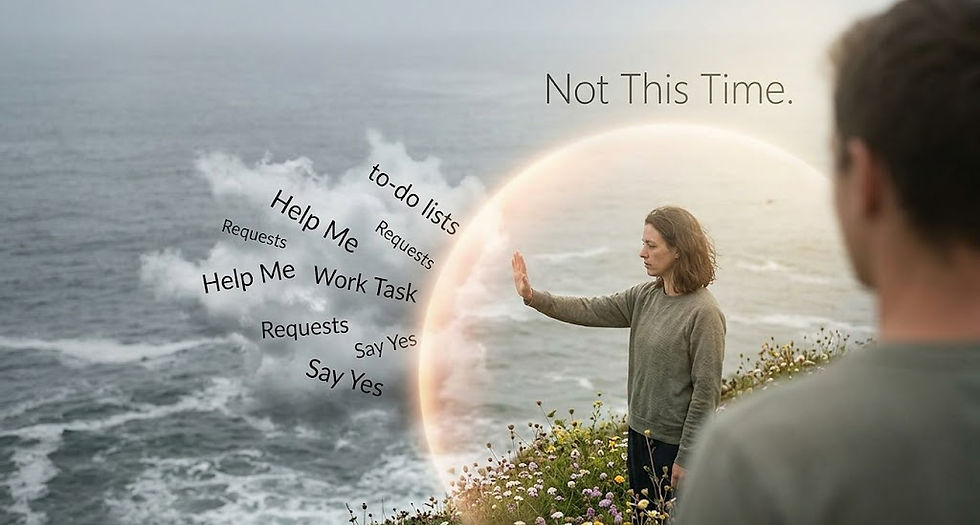
Why Setting Limits Can Actually Reduce Anxiety
Let’s start with a question I often ask clients: When was the last time you said “yes” to something you didn’t actually have the capacity for? If you’re like most people, it probably wasn’t that long ago. Maybe it was agreeing to help someone when you were already overwhelmed. Maybe it was taking on another responsibility at work. Maybe it was saying yes simply because saying no felt uncomfortable. And yet, those small yeses have a way of adding up, until suddenly, you’re exhausted, stretched thin, and wondering why your anxiety feels so high. Let’s talk about why that happens, and why learning to say “no” might be one of the most important skills for managing anxiety.
How Overcommitting Fuels Anxiety
Anxiety isn’t just about thoughts; it’s also about load. When your schedule is packed, your responsibilities are high, and your time to rest is limited, your nervous system has very little room to recover. You’re constantly “on,” moving from one demand to the next. Over time, this can lead to:
Chronic stress
Irritability and mental fatigue
Difficulty concentrating
A sense of being overwhelmed or “on edge.”
From a physiological perspective, ongoing stress keeps your body in a heightened state of activation, which we often call “fight or flight.” When that system doesn’t get a chance to reset, anxiety becomes more persistent. In other words, it’s not just what you’re thinking, it’s also how much you’re carrying.
Why Saying “No” Feels So Hard
If saying no is so helpful, why is it so difficult? Because for many people, “no” isn’t just a word, it’s tied to deeper fears:
“What if I disappoint someone?”
“What if they think I’m selfish?”
“What if I miss out?”
“What if this affects how I’m seen or valued?”
At its core, this often comes back to a very human need: belonging. We are wired to maintain relationships and avoid rejection. So even when something isn’t right for us, saying yes can feel like the safer option emotionally.
But here’s the tradeoff: When you constantly say yes to avoid discomfort, you often end up creating more internal distress.
The Hidden Cost of Always Saying Yes
Every “yes” you give is also a “no” to something else, usually your time, energy, or well-being. Over time, this can lead to:
Burnout
Resentment (even toward people you care about)
Feeling disconnected from your own needs
Increased anxiety and emotional overwhelm
Research on stress and coping consistently shows that lack of perceived control is a major contributor to anxiety (American Psychological Association, 2023). When your time and energy feel controlled by external demands, your stress levels rise. Saying “no” is one way of reclaiming that sense of control.
What Saying “No” Actually Does for Your Anxiety
When you start setting limits, a few important things happen:
1. Your nervous system gets a break. You’re no longer operating at full capacity all the time, which allows your body to return to a calmer baseline.
2. You create space for what matters. Instead of reacting to every request, you can choose what aligns with your values and priorities.
3. You build self-trust. Each time you honor your limits, you reinforce the belief: “I can take care of myself.”
And that sense of internal safety is one of the most powerful antidotes to anxiety.
What Healthy “No” Actually Sounds Like
A lot of people think saying no has to be harsh or abrupt. It doesn’t. It can be simple, respectful, and clear:
“I can’t commit to that right now.”
“I appreciate you asking, but I need to pass.”
“That doesn’t fit into my schedule at the moment.”
“I don’t have the capacity for that, but I hope it goes well.”
Notice what’s not required:
Over-explaining
Apologizing excessively
Justifying your needs
You’re allowed to have limits, even if others don’t fully understand them.
A Helpful Reframe
Instead of thinking: “I’m letting someone down by saying no.”
Try: “I’m taking care of my capacity so I don’t burn out.”
Because the truth is, when you’re constantly overwhelmed, you’re not able to show up fully anyway.
Saying no in the short term often allows you to be more present, engaged, and available in the long term.
Building the Skill (Because It Is a Skill)
If saying no feels uncomfortable, that’s okay. It’s something you can practice. Here are a few ways to start:
Pause before responding. You don’t have to answer immediately. Try: “Let me check my schedule and get back to you.”
Check in with your body. Before saying yes, ask yourself: “Do I actually have the energy for this?”
Start small. Practice saying no in lower-stakes situations first. Confidence builds over time.
Expect some discomfort. It might feel awkward at first, and that’s normal. Discomfort doesn’t mean you’re doing something wrong. It often means you’re doing something new.
Boundaries and Anxiety Management
Setting boundaries is not just a personal preference; it's a mental health practice. When people consistently take on more than they can reasonably manage, stress often increases and emotional resources become depleted. Research has shown that chronic stress can affect both psychological and physical well-being, particularly when individuals feel they have little control over the demands placed upon them (American Psychological Association, 2023).
Healthy boundaries help create a greater sense of balance by protecting your time, energy, and emotional resources. They also create opportunities for self-care and self-compassion, which have been associated with greater emotional well-being and resilience (Neff & Germer, 2018).
The National Institute of Mental Health notes that anxiety can interfere with daily functioning when feelings of worry or fear become persistent and difficult to manage (NIMH, n.d.). While setting boundaries is not a cure for anxiety, it can reduce unnecessary stressors and create the space needed for recovery, regulation, and overall emotional health.
Boundaries help regulate:
Emotional energy
Time demands
Interpersonal stress
And all of these are directly connected to anxiety levels.
A Final Thought
If you take one thing from this, let it be this:
Saying “no” is not about pushing people away. It’s about protecting your capacity so you can show up in your life in a sustainable way. You don’t have to earn rest. You don’t have to justify your limits. And you don’t have to say yes to everything to be valued. Sometimes, the most compassionate thing you can do, for yourself and for others, is to say:
“Not this time.”
And trust that it’s enough.
References & Resources
American Psychological Association. (2023). Stress in America Survey
Neff, K., & Germer, C. (2018). The Mindful Self-Compassion Workbook
National Institute of Mental Health (NIMH): Anxiety Disorders Overview
Patricia L. & David J. Carter
This topic is explored in depth in our upcoming book,
Rewiring Anxiety: How to Train Your Nervous System for Calm.
Click here to be notified when it launches!
Comments